
How Universal Standard went from 10 listings to a full catalog on Macy's and Nordstrom
Universal Standard had 10 live marketplace listings and thousands of styles stuck in Shopify. They got the full catalog live on Macy's and Nordstrom in five days.
Universal Standard built its name on inclusive sizing, with elevated essentials from XXS to 4XL. Shoppers knew the brand. On Macy's and Nordstrom, though, it barely existed: ten live listings, with a catalog of thousands sitting in Shopify.
"Before Osello, we were nowhere. Ten listings. We barely existed."
Michelle Lee, VP of Product Development, Universal Standard
Why ten listings stayed ten listings
The demand was there. The bottleneck was the work between Shopify and the marketplace. Every new style meant mapping fields by hand, resizing images to each retailer's spec, submitting, and then chasing the rejections that came back.
That process holds up for ten SKUs. It breaks for a full size run across thousands of styles. Hiring more people to push spreadsheets would have pulled the team away from product and growth, the work that built the brand in the first place.
So the question wasn't how to list faster by hand. It was how to get the whole catalog live without a six-month onboarding project.
What changed
Osello connected to Universal Standard's Shopify store and mapped the full catalog to Macy's and Nordstrom requirements: every style, size run and attribute, with no exports and no manual field mapping.
When a retailer rejected a listing, Osello corrected it and resubmitted it automatically. Within five days, listings were in review. Within the week, the catalog was live.
The results
- 5 days from install to the first live listing
- 93% of listings approved on first submission
- Full catalog synced from Shopify to both marketplaces
Listings now stay in sync with Shopify, so nobody re-enters data every day. The operations team is back on product and growth.
"I can't imagine convincing myself, or anyone on the team, to go back to how we did it before."
Stephanie Nelson, Senior Director of Operations, Universal Standard
What other brands can take from it
- Ten live listings usually means the process is the problem, not the product. If every SKU takes manual mapping and image work, the catalog stops growing at whatever your team can type.
- Rejections are where the time goes. First-submission approval matters more than how fast you submit: a 93% approval rate means very few listings bounce back for another round.
- Start from the catalog you already keep. Universal Standard's Shopify data was already complete. It only needed to reach each retailer in the shape that retailer expects.
Watch the interview and read the full story on the Universal Standard case study page.
Keep reading
Guides & TipsNovember 2, 20266 min read
How long Target+, Nordstrom, Macy's and Bloomingdale's take to review your listingsWe measured 15,531 product variants across four department store marketplaces. Target+ answers in about a day and a half. Bloomingdale's takes two weeks or more. Here's what that means for your launch plan.
Guides & TipsSeptember 16, 20269 min read
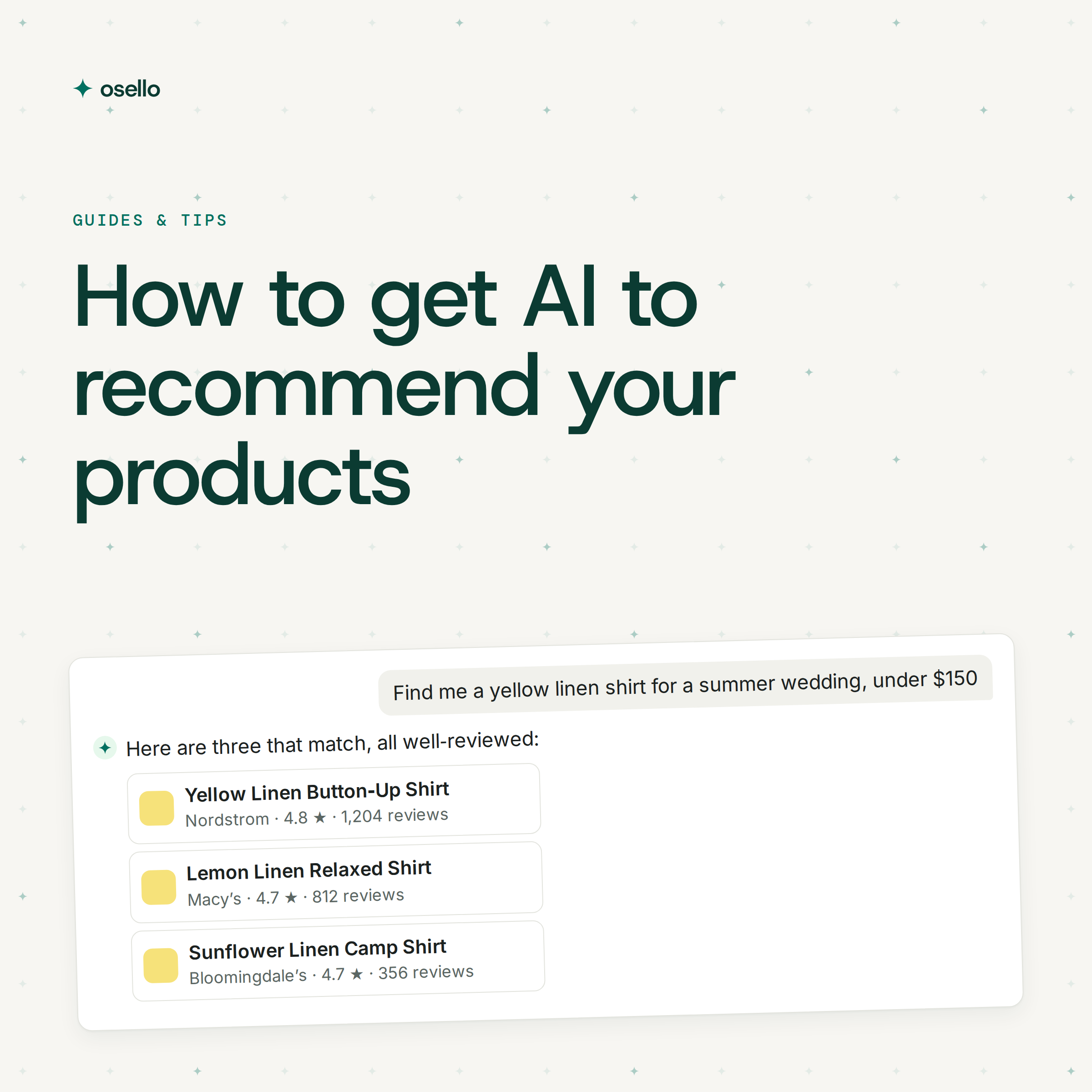
How to get AI to recommend your productsShoppers now ask ChatGPT and Perplexity instead of clicking through Google. What fashion brands can do about it: the 80% you should already be doing, and the 20% that moves the needle.
Guides & TipsAugust 10, 20263 min read
How fashion brands actually get into Nordstrom MarketplaceNordstrom doesn't publish an application link. Here is how the invitation process really works, what reviewers look for, and the three things that get brands rejected.
Guides & TipsAugust 8, 20263 min read
Why every department store suddenly wants your brandMacy's, Nordstrom, and Bloomingdale's all launched marketplaces within a few years of each other. The wholesale math stopped working, and that is an opening for independent brands.
See it with your actual catalog
30 minutes with your real Shopify catalog. No sales script. No sales pressure.
Get a demo