Why every department store suddenly wants your brand
Macy's, Nordstrom, and Bloomingdale's all launched marketplaces within a few years of each other. The wholesale math stopped working, and that is an opening for independent brands.
For a century, the deal between department stores and fashion brands was wholesale: the store buys your inventory at half of retail, owns the risk, and controls the presentation. Getting in meant surviving a buyer meeting, committing to production minimums, and accepting that markdowns would eat your margin at season's end.
That deal is quietly being replaced. Macy's, Nordstrom, and Bloomingdale's now all run marketplace programs alongside their wholesale business. Same website, same customer, same brand halo, except the inventory stays yours, the price stays full, and the store takes a commission instead of a markup.
The math that forced the change
Department stores have a square-footage problem online. A store buyer can only commit open-to-buy dollars to so many brands, which caps how much assortment the website can carry. Meanwhile Amazon trained customers to expect that the store has everything.
Marketplace flips the constraint. The retailer can list ten times the assortment with zero inventory dollars, collect a commission on every sale, and use the sales data to decide which marketplace brands deserve a wholesale order later. For the retailer, it is a discovery engine that costs nothing to stock.
Nordstrom's leadership has been explicit that the marketplace exists to expand choice without expanding risk. Macy's launched its marketplace in 2022 and has been adding categories since. Bloomingdale's followed on the same platform infrastructure. This is no longer an experiment; it is the assortment strategy.
What it means for a brand doing $1M to $20M
The practical translation: the doors that required a wholesale relationship, a showroom, and two years of persistence now have a second entrance.
Full-price economics. On marketplace you sell at your price and keep roughly 75 to 85% of it after commission, against the roughly 50% of retail wholesale pays. And that is before markdowns and chargebacks make wholesale worse.
No inventory bet. Wholesale means producing against a purchase order months ahead. Marketplace means listing what you have. For a brand managing cash, that difference is existential.
The halo without the buyer. Your products appear in nordstrom.com and macys.com search results next to established brands. Customers do not distinguish marketplace listings from wholesale ones. The credibility transfer is the same; press and wholesale buyers notice it too.
A wholesale audition. Retailers watch marketplace sell-through. Brands with strong velocity get the call about wholesale orders. The data replaces the pitch meeting.
The catch
The catch is operational. Each marketplace has its own taxonomy, required fields, image rules, and service-level expectations, and none of them match your Shopify catalog as-is. A brand going direct will spend weeks per marketplace on item setup and then carry the ongoing burden of keeping inventory, prices, and orders in sync.
The real gate now is the data work, not the buyer meeting. The brands winning this shift treat marketplace operations as infrastructure rather than a side project, whether they build that muscle in-house or hand it to a partner who already has it.
The window matters, too. Early marketplace catalogs are thin, which means search results are winnable in ways they will not be once every brand in your category has figured this out. The brands listing now are buying placement that will be genuinely contested in two years.
Keep reading
Guides & TipsSeptember 16, 20269 min read
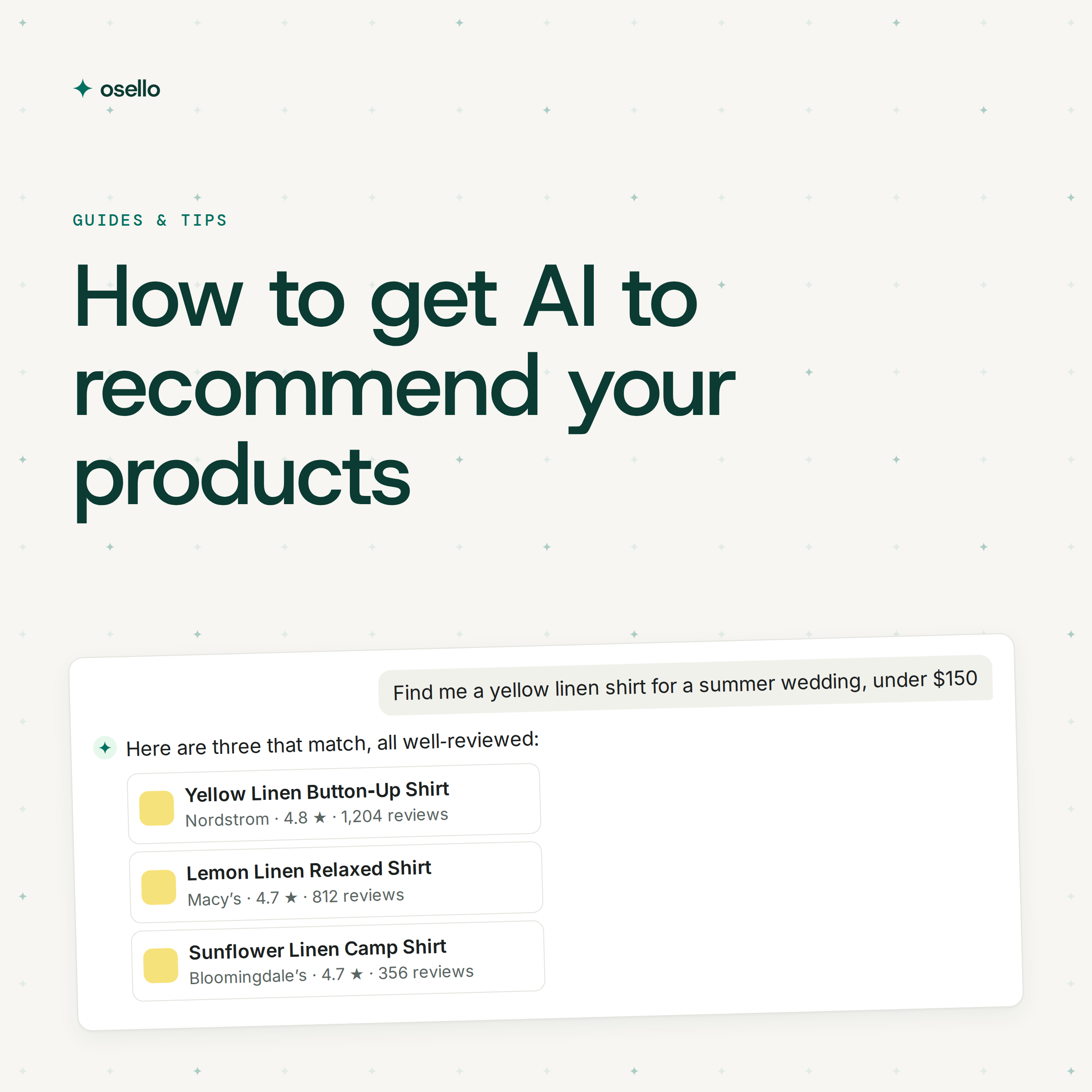
How to get AI to recommend your productsShoppers now ask ChatGPT and Perplexity instead of clicking through Google. What fashion brands can do about it: the 80% you should already be doing, and the 20% that moves the needle.
Guides & TipsAugust 10, 20263 min read
How fashion brands actually get into Nordstrom MarketplaceNordstrom doesn't publish an application link. Here is how the invitation process really works, what reviewers look for, and the three things that get brands rejected.
Guides & TipsAugust 6, 20263 min read
The brand book buyers actually readRetail reviewers spend minutes, not hours, with your application. A brand book earns those minutes or wastes them. Here is the five-part structure that works.
Guides & TipsAugust 4, 20263 min read
The marketplace readiness checklist: 21 things to fix before you list anywhereA working checklist covering catalog data, imagery, operations, and brand assets, the four areas every marketplace reviews, in the order they will find the gaps.
Your catalog. On every marketplace.
Osello syncs styles, imagery, and inventory from your Shopify catalog to the marketplaces you sell on.
Learn more