The marketplace readiness checklist: 21 things to fix before you list anywhere
A working checklist covering catalog data, imagery, operations, and brand assets, the four areas every marketplace reviews, in the order they will find the gaps.
 By Jay El-KaakeAugust 4, 20263 min read
Every marketplace, from Nordstrom to Macy's to Bloomingdale's to Target+, runs your brand through the same four filters: catalog data, imagery, operations, and brand assets. The names of the required fields change; the filters do not.
This is the checklist we run before taking any fashion brand into a new channel. Work through it honestly and you will know exactly how far you are from retail-grade, and where the weeks of delay are hiding.
Catalog data
- Every SKU has a unique, stable identifier. Marketplaces reject catalogs where SKUs change between uploads or duplicate across variants.
- GTINs/UPCs exist for every variant. Most premium marketplaces require them. If you have never bought barcodes, that is a two-week lead time you want to start now.
- Parent/child structure is clean. One parent per style, children per size and color. Catalogs that flatten every variant into standalone products fail category setup immediately.
- Titles follow a consistent formula. Brand, style name, category, defining attribute. No ALL CAPS, no "NEW!", no keyword stuffing; premium marketplaces flag it.
- Descriptions are complete and honest. Fabric content, fit notes, care instructions. Marketplace copy standards are closer to a catalog than an Instagram caption.
- Category-specific attributes are filled. Sleeve length, rise, occasion, fabric weight. This is the single biggest source of item-setup delay: a typical apparel marketplace requires 20 to 40 fields per product, and your Shopify catalog probably holds a third of them.
- Size charts exist per category, not one chart for the whole store.
Imagery
- Primary images meet marketplace spec: on-model or ghost, neutral background, minimum resolution around 1600px on the long edge.
- Every color variant has its own image set. Swatch-only variants get rejected or buried.
- At least three angles per style, plus a detail shot for anything with texture or hardware.
- No watermarks, no lifestyle-only sets, no borders or text overlays on primary images.
- Image file naming maps to SKUs so bulk upload does not become a manual matching project.
Operations
- You can ship marketplace orders within the SLA, usually one to two business days, every week of the year, including drop weeks.
- Inventory accuracy survives an audit. If your Shopify counts drift from your warehouse counts, marketplace overselling will surface it within a month, and marketplaces suspend for it.
- Returns handling is defined. Who pays, what window, what condition standards, and it matches the marketplace's minimum policy.
- Packing slips and labels can carry the marketplace's requirements, not your DTC branding, where the channel demands it.
- Someone owns order issues. A marketplace ticket that sits for three days becomes a metric that gets you demoted in search.
Brand assets
- A brand book exists: story, positioning, target customer, merchandising strategy, visual identity. It carries every application.
- Your price architecture is consistent across channels. Marketplaces monitor; undercutting nordstrom.com on your own site sours the relationship fast.
- Your brand name is trademark-clean in the marketplace's operating regions. Verification checks catch this.
- You know your assortment plan for the channel: which styles, what depth, what launch cadence. Decide before item setup starts, not after.
Scoring it
Most brands doing $1M to $20M pass operations, half-pass imagery, and fail catalog data, usually on items 3, 6, and 12. That is normal, and it is fixable in weeks rather than months when it is treated as a project with an owner.
The order matters, too: fix catalog data before imagery, and imagery before applications. A strong application that leads to a stalled item setup burns the channel relationship you just earned.
Keep reading
Guides & TipsSeptember 16, 20269 min read
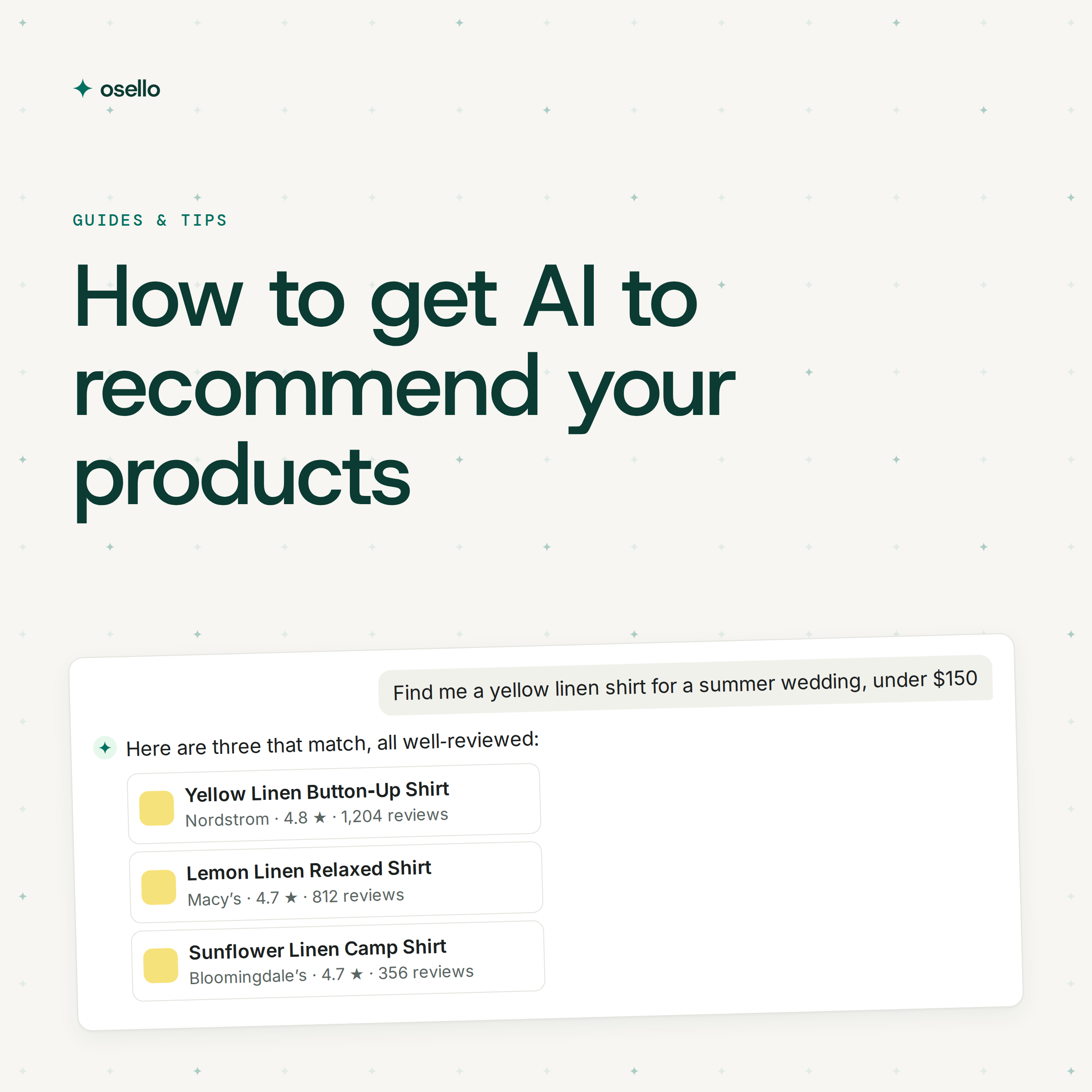
How to get AI to recommend your productsShoppers now ask ChatGPT and Perplexity instead of clicking through Google. What fashion brands can do about it: the 80% you should already be doing, and the 20% that moves the needle.
Guides & TipsAugust 10, 20263 min read
How fashion brands actually get into Nordstrom MarketplaceNordstrom doesn't publish an application link. Here is how the invitation process really works, what reviewers look for, and the three things that get brands rejected.
Guides & TipsAugust 8, 20263 min read
Why every department store suddenly wants your brandMacy's, Nordstrom, and Bloomingdale's all launched marketplaces within a few years of each other. The wholesale math stopped working, and that is an opening for independent brands.
Guides & TipsAugust 6, 20263 min read
The brand book buyers actually readRetail reviewers spend minutes, not hours, with your application. A brand book earns those minutes or wastes them. Here is the five-part structure that works.
Your catalog. On every marketplace.
Osello syncs styles, imagery, and inventory from your Shopify catalog to the marketplaces you sell on.
Learn more